Material Specifications
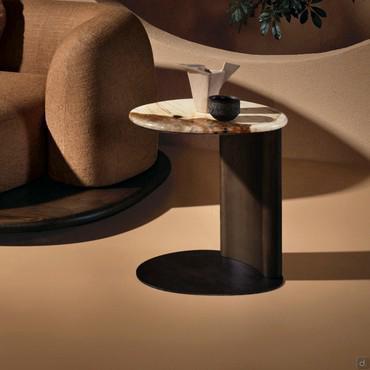
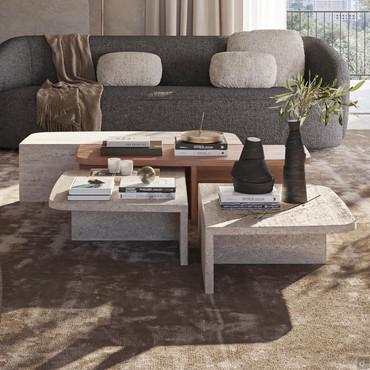
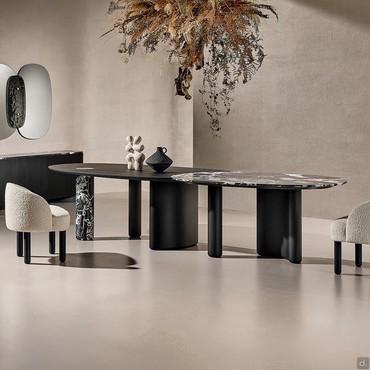
Marble: elegant and refined stone marble, characterised by open veins that sometimes may present some resin based speckles that create a uniform and smooth surface so that the top comes with no irregularities, granting additional structural resistance. Because it is a natural stone that is sometimes more than a million years old, the surface cannot be defined as 'perfect'; each piece is different from the next, depending on the cutting and polishing process. It may have natural micro imperfections, a characteristic of marble and not due to defects. Marble tops are naturally porous: any protective polyester treatment hides this porosity to the touch, leaving all the natural features of the stone visible.
Hammered glass is obtained by working the sheet in a melting furnace (this is why it is also called 'fired glass') The sheet that has already been moulded is in fact heated and then left to cool: The sheet that has already been moulded is in fact heated and then left to cool: as it cools, the glass 'relaxes', acquiring the particular texture: the effect you get as a result is a wavy surface reminiscent of wrought iron, rich and textured both to the eye and to the touch, which gives a pleasant play of light, shadows and reflections.
Due to the significant thickness of the slabs, the extra-clear glass along the borders may present a light green reflex (in a smaller degree compared to a non extra-clear tempered glass), that can be enhanced by the light and the context in which it is inserted.
The top in fired glass is designed to be mounted with the smooth side on top and the hammered side on the bottom.
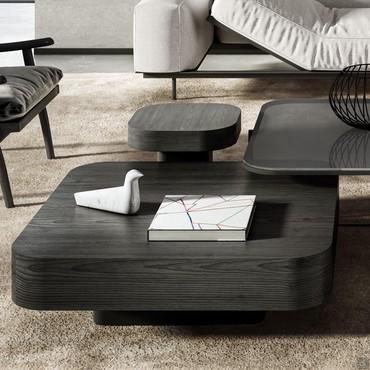
Solid wood is wood from FSC-certified supplies (forests managed correctly and responsibly according to strict environmental, social and economic standards).
All woods are finished with an all natural, food-grade, water-based, colourless clear top coat. Glues are limited as much as possible in favour of mechanical joints; if used, vinyl glues are zero formaldehyde, ammonia and APEO emission.